 Mass Transit Ambassadors
masstransitambassadors.com
Mass Transit Ambassadors
masstransitambassadors.com
Public Transit Support Platform
Safer, calmer transit through visibility, response, and coordination
Mass Transit Ambassadors is a connected public transit platform built around rider reporting, friendly ambassador presence, management oversight, and agency-first response. It helps transit systems resolve issues earlier, route the right support faster, and reduce conflict through calm mitigation and practical rider assistance.
Why It Matters
Better help for riders, better coordination for transit agencies
Transit riders need a clear way to report issues without confusion, delay, or unnecessary escalation. Transit agencies need better visibility into what is happening across trains, buses, stations, and platforms. Mass Transit Ambassadors connects those needs into one practical system.
For riders
Faster reporting, clearer follow-up, and visible ambassador presence that can help restore comfort before a situation grows.
For ambassadors
One field-ready tablet with assignment context, incident logging, and service tools like free earbuds, fans, hand warmers, and bus assistance that match their role.
For agencies
Shared operational awareness across managers, CTA staff, platform teams, and operators with better routing and clearer accountability.
How It Works
One issue can move through the whole system
The system is designed to start with riders, continue through ambassadors and management, and then route to CTA staff or operators only when needed.
Report or request support
Riders can report smoking, loud audio, request ADA support, or ask for an ambassador check-in from the rider app.
Validate and route
The system uses route, stop, existing car numbers, bus IDs, and nearby ADA-area context to route the case and keep the response focused on the right place.
Respond in the field
Ambassadors receive assignments, observe first, offer free earbuds when appropriate, provide practical support like fans, hand warmers, or bus assistance, and report incidents or outcomes through body-strap tablet functions.
Coordinate agency action
Managers, CTA terminals, and operator tools can view the same case and coordinate announcements, intercepts, or escalation.
Technology
Purpose-built tools for each role in transit operations
The apps below show how one connected platform can support both the public rider experience and the operational response tools used by ambassadors, transit staff, and system managers.
Body-strap ambassador tablets
- Assignment-aware field tablet
- Incident logging and status levels
- Service tools, recording, and messaging
- Built for visible, fast-access use in motion
Manager and CTA dashboards
- Incident visibility and response tracking
- Route, stop, and intercept context
- Inventory, staffing, and service monitoring
- Connected agency response views
Operator and public interfaces
- Rider-friendly reporting experience
- Operator escalation-only interface
- Public information and rider-facing access
- Shared case visibility across multiple tools
Existing CTA Environment
The system can start with identifiers riders already see onboard
CTA train cars already display identifying numbers, and ADA-adjacent speaker areas give riders a useful reference point inside the car. That means the reporting flow can start with the current transit environment and add new tools later only where they help.
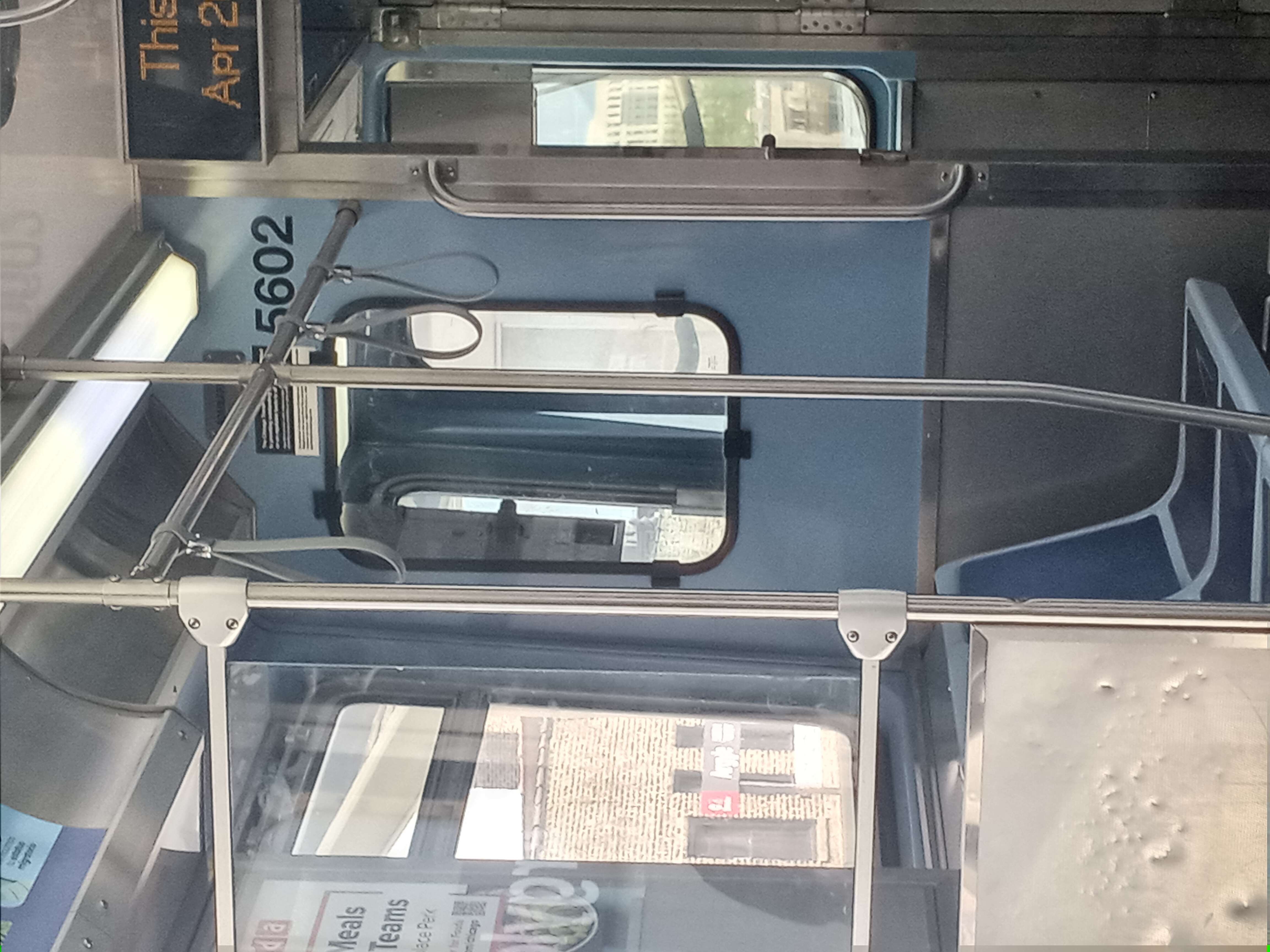
Existing car number plus ADA-area reference
Riders can identify the correct vehicle using the visible car number and nearby accessibility cues, which keeps the report focused on the right place without tracking the rider.
Optional enhancements can come later
Optional scan tools, signage upgrades, and deeper integrations can improve speed over time, but the core response model does not depend on inventing a brand-new onboard system first.
System In Action
From big-picture workflow to vehicle-level response
These visuals show how the platform works across the entire system, from the first rider report through field response, agency coordination, and operator awareness.
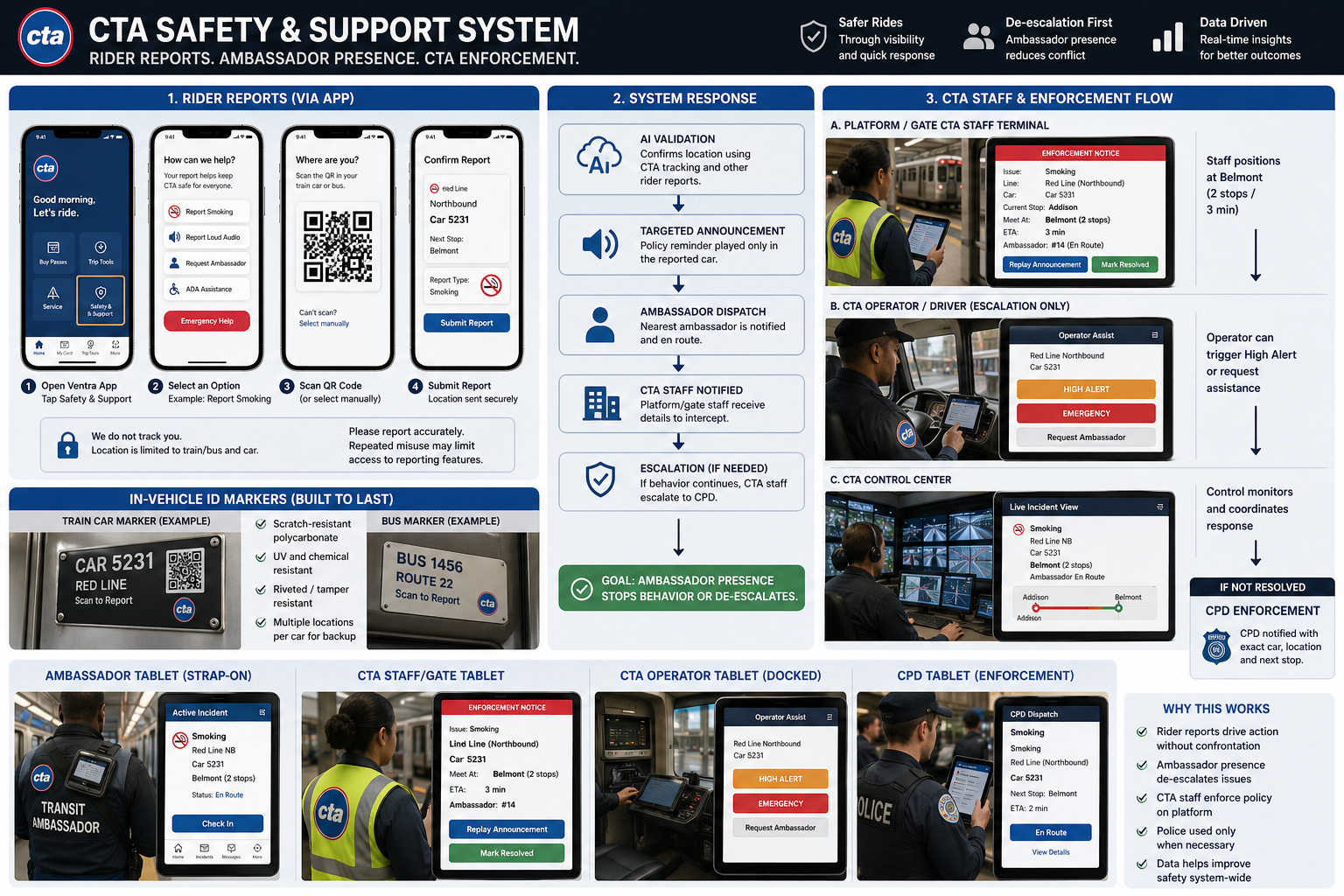
Full system overview
The platform begins with riders and flows through ambassador response, manager oversight, CTA staff coordination, and final escalation only when needed.
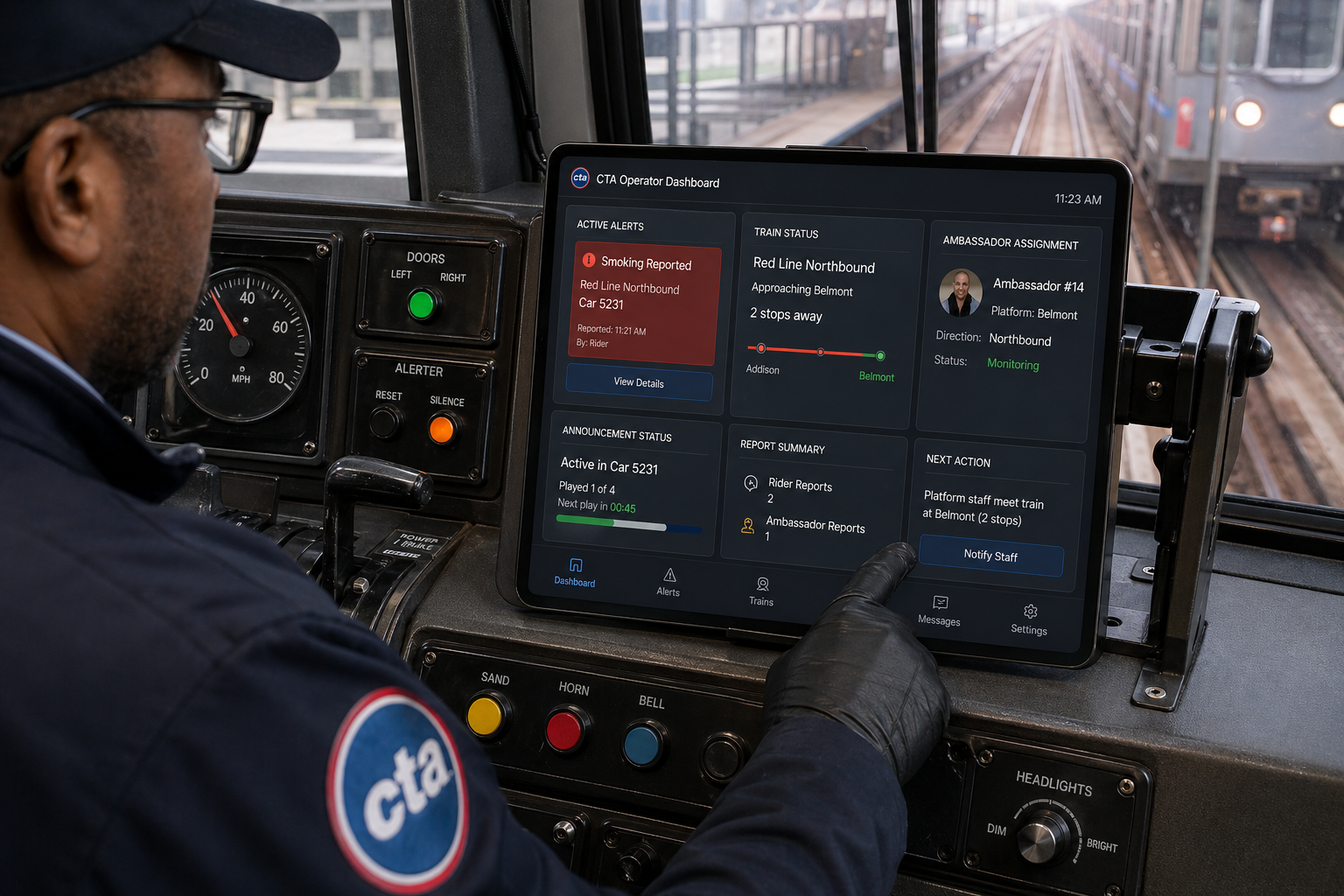
Operator awareness
Operators use limited escalation-only tools that preserve safe vehicle operations while keeping them informed about active alerts and upcoming intercepts.
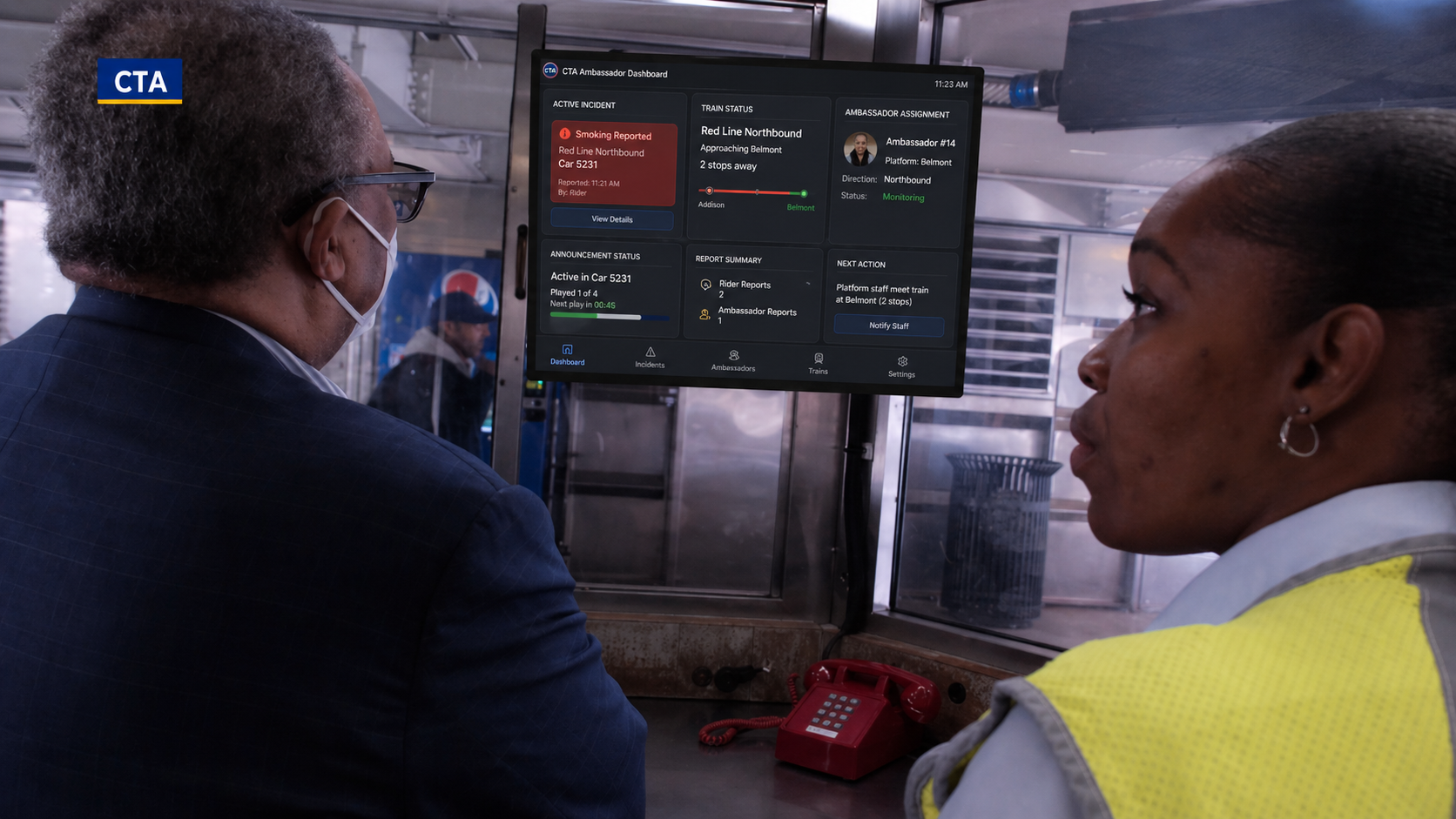
Agency coordination
Transit staff can see the same case information, stop counts, and response state so platform and control teams work from one shared picture.
Platform Access
Explore the public experience and the operational response tools
The public-facing rider app sits at the front of the system. Behind it, ambassadors, managers, terminals, and operators use connected tools that help transit agencies respond with better visibility and clearer coordination.