Rider App Flow
Fast, trusted, minimal-friction reporting
Safety & Support
- Report Smoking
- Report Loud Audio
- Request Ambassador
Use Car Number
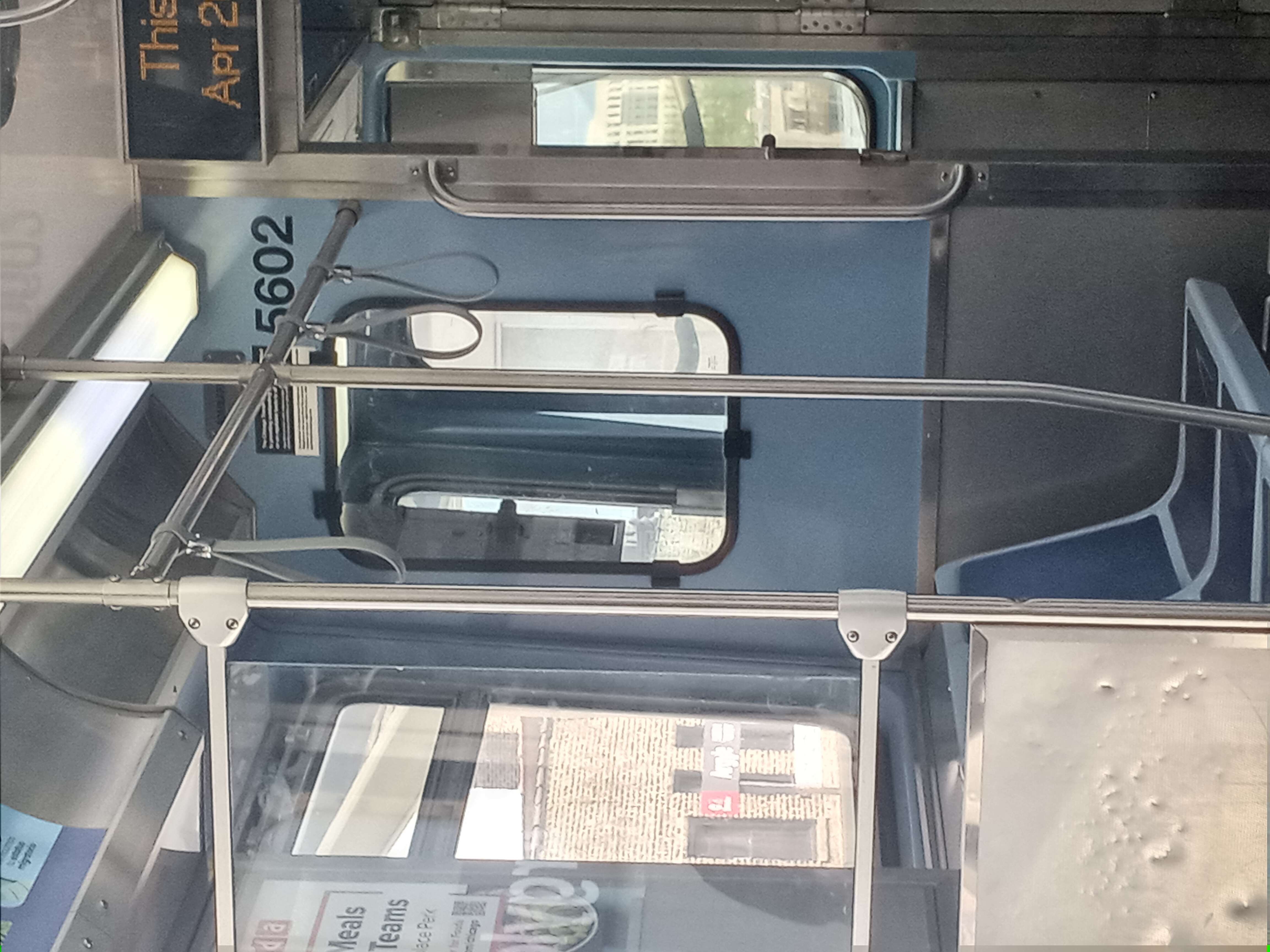
Use the visible car number and nearby ADA area or speaker reference. No user tracking.
Rider App Principles
Low Friction
Report Smoking
Direct category capture for fast routing.
Report Loud Audio
Quality-of-ride issues are actionable too.
Request Ambassador
Support can be requested without a police threshold.
Location Logic
Only train/bus/car context is used, not individual rider tracking.
AI System Response
AI-driven coordination, human-led action
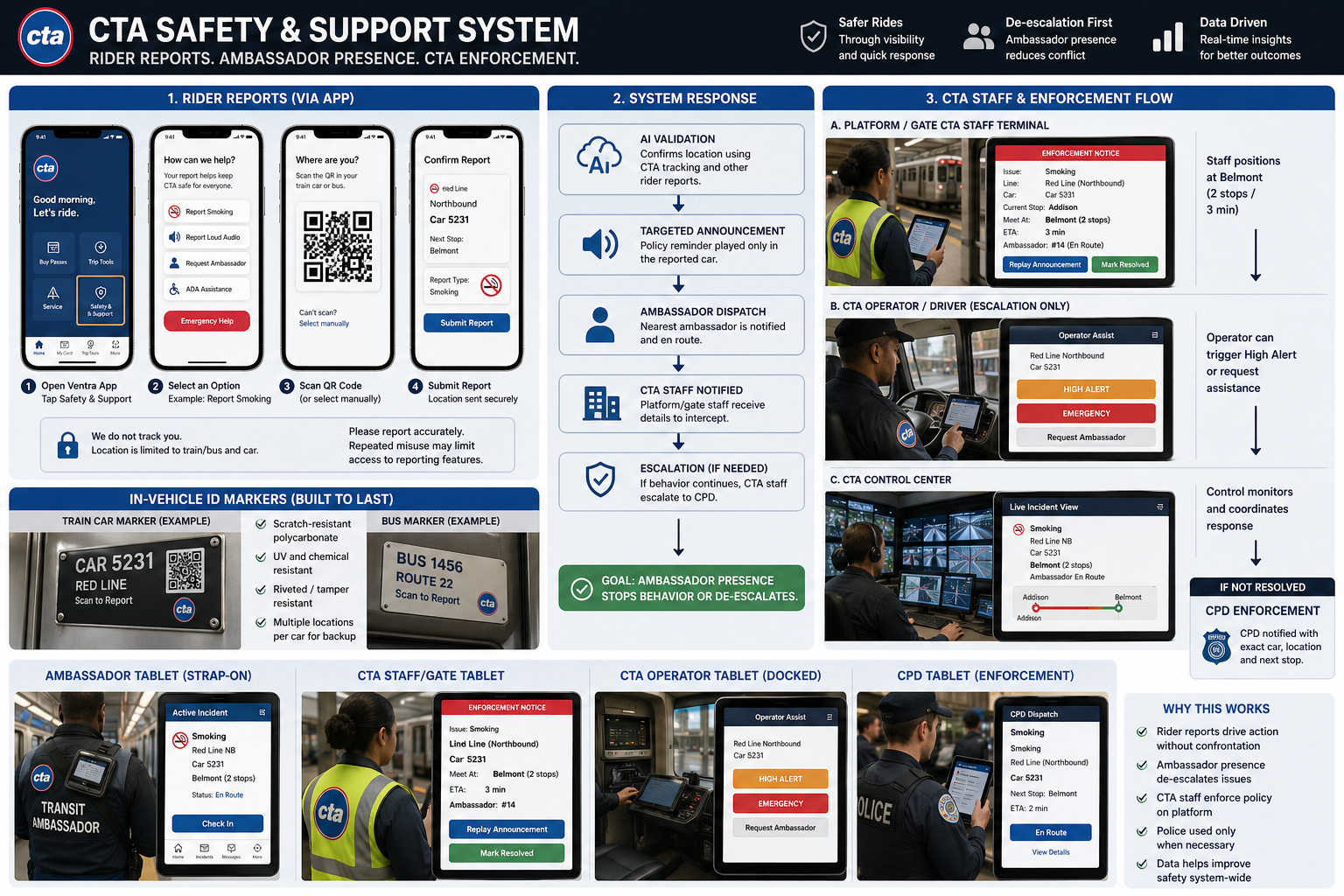
Rider ReportIssue enters system with line and car ID
AI ValidationChecks duplicates, confidence, and severity
Targeted AnnouncementPlays in the affected car only
Ambassador DispatchNearest ambassador routed to observe
CTA Staff NotifiedPlatform and gate teams prepare intercept
EscalationOnly if unresolved or high risk
AI ValidationDuplicate suppression
Announcement LogicCar-only playback
Dispatch LogicNearest ambassador
Escalation LogicThreshold-based handoff
Ambassador System
Observe, support, and de-escalate
LOWPresence effective
MEDIUMOngoing
HIGHRisk
RESOLVEDClosed
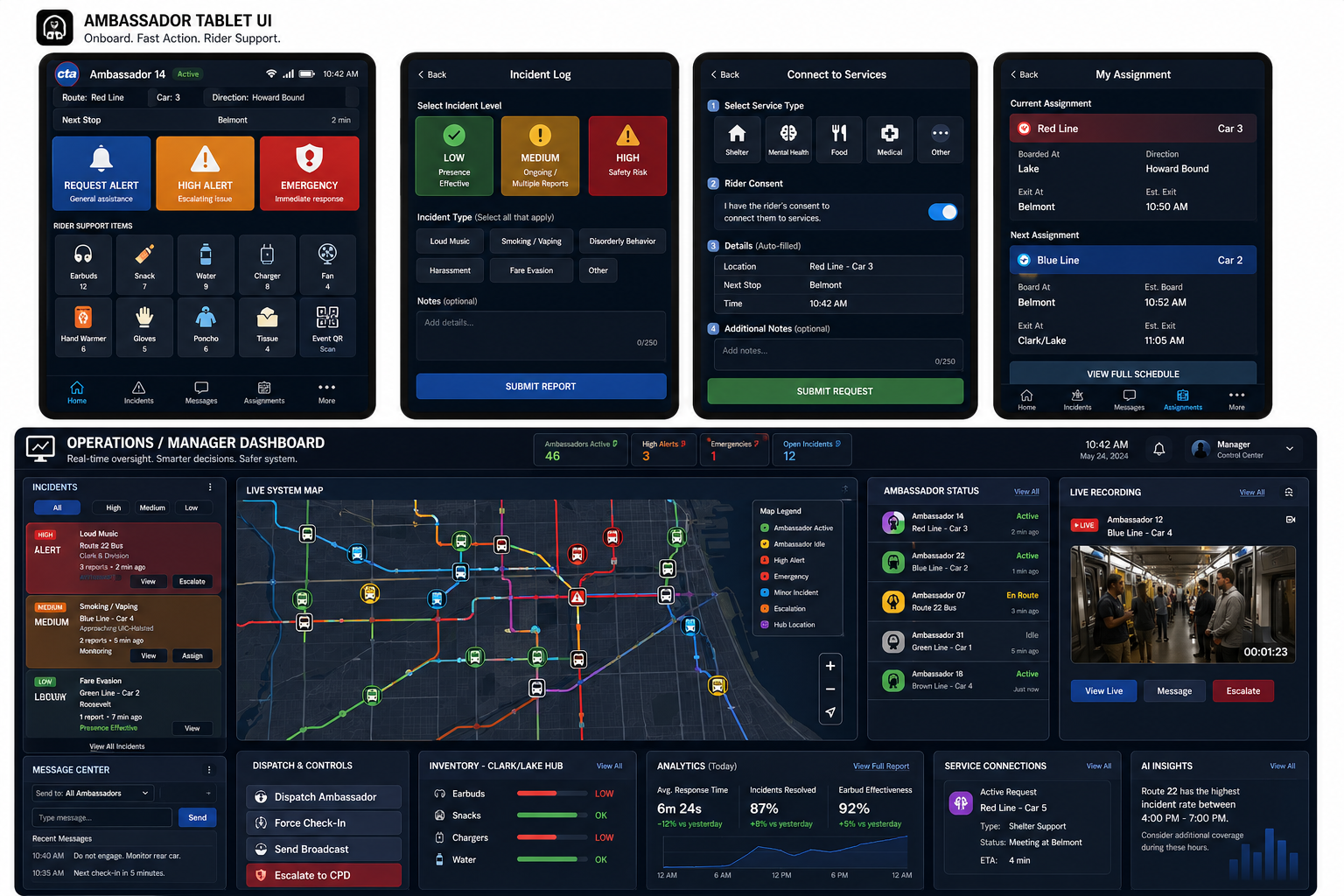
Chest-mounted tablet
Secure strap-on interface for field mobility.
Observe, not enforce
The ambassador role is presence-first, not police-like.
Service-first interaction
Focus on calming the environment and connecting support.
CTA Enforcement Layer
CTA acts before police
Platform workers enforce policy
Workers meet the train with exact car information.
Gate agents receive alerts
Station teams support passenger flow and follow-through.
Police stay in reserve
CPD enters only if the event remains unresolved or becomes dangerous.
Platform / Gate CTA Staff Terminal
Enforcement Notice
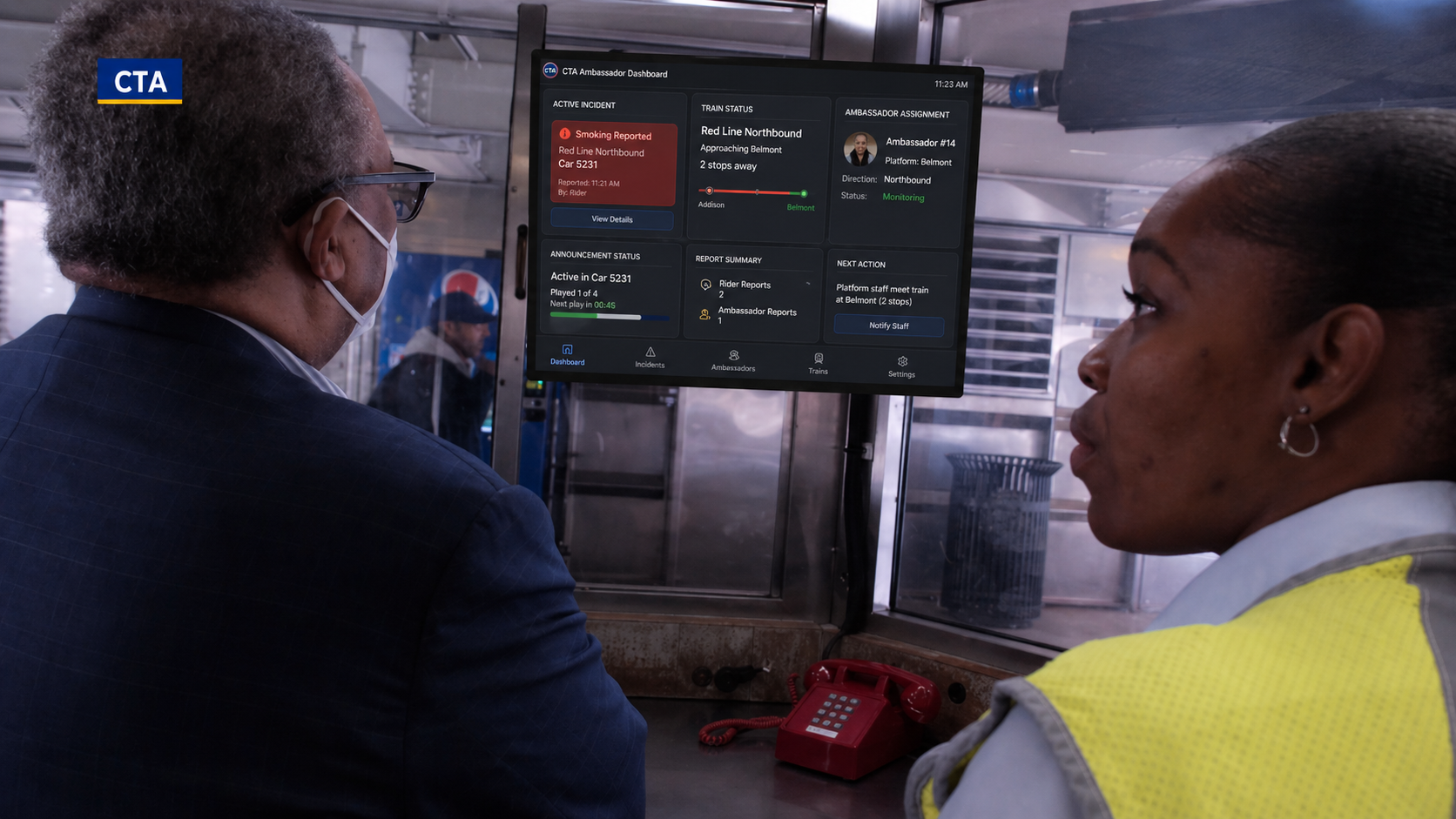
Issue: Smoking
Line: Red Line Northbound
Car: 5231
Meet at: Belmont
ETA: 3 min
Ambassador: #14 en route
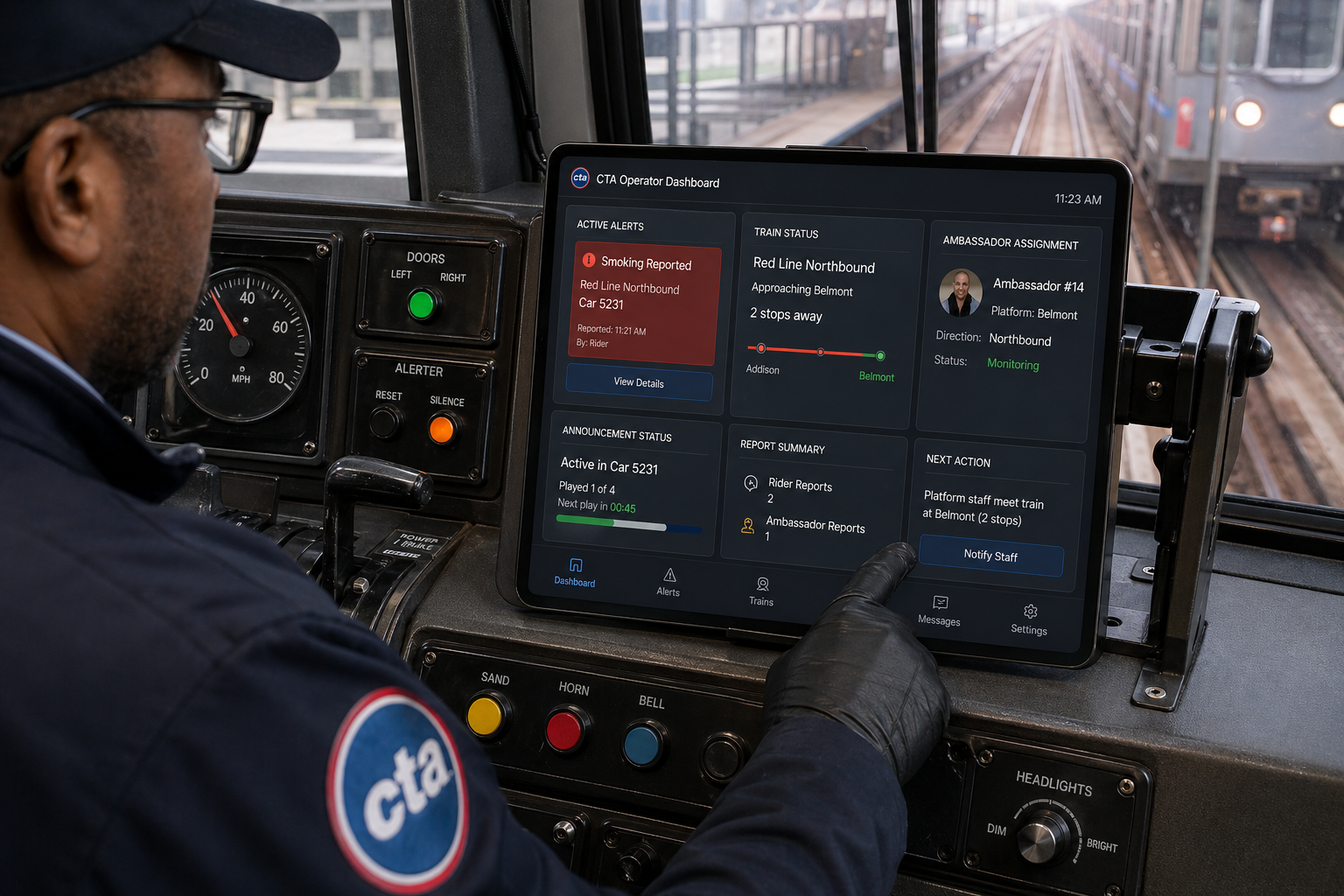
Operator Interface
Escalation-only controls in the cab
Docked tablet in cab
Stable, dedicated interface with clear action hierarchy.
Used only for escalation
Operators are not expected to actively monitor cars.
Dashboard
Manager view for live system control
Ambassadors Active46
High Alerts3
Emergencies1
Open Incidents12
Live System Map
Ambassador Status
Active
Ambassador 14 - Red Line Car 3
Active
Ambassador 22 - Blue Line Car 2
En Route
Ambassador 07 - Route 22 Bus
Dispatch & Controls
AI Insights
Route 22 has the highest incident rate between 4:00 PM and 7:00 PM. Consider additional coverage during those hours.
Live system map
Active incidents, ambassador locations, and intercept paths.
Ambassador tracking
Status, assignments, and ETA visibility.
Incident feed
Real-time queue of low, medium, and high alerts.
Recording alerts
Escalation, visibility, and evidence review channels.
Inventory tracking
Support supplies and hub readiness by location.
Physical System
Hardware choices built for real transit wear
Existing CTA car identifiers
Cars already display identifying numbers that riders can use to report the correct vehicle.
ADA-area location cues
Nearby ADA speaker or accessibility areas can help riders describe exactly where they are in the car.
Ambassador hubs
Manned booths support staffing, charging, coordination, and supplies.